
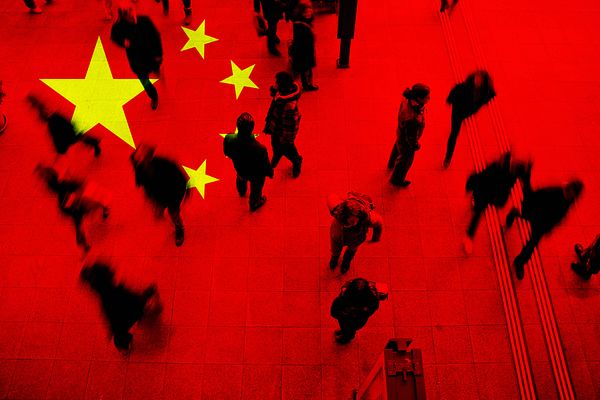

The global power dynamics have shifted dramatically with the rise of China, necessitating adjustments. Since its economic reforms in 1978, China’s GDP has grown by an average of 9 percent annually, lifting 800 million people out of poverty.
However, China’s rapid ascent is now slowing down, prompting incumbent global powers to reassess their strategies in the face of this new reality.
The significant growth of China’s economic and military power, particularly since joining the World Trade Organization in 2001, has caused confusion among Western powers, leading to increased competition and containment efforts.
Assessing whether China has already peaked or still has further growth potential requires a close examination of empirical data and historical patterns.
There is concern that China’s future dominance could reshape global foreign policy, moving towards a China-led multipolar world and potentially challenging the West’s historical hegemony.
Predictions of China surpassing the United States as the world’s largest economy have been made before but have not materialized. Official statistics indicate that China’s workforce has already reached its peak and is projected to decline in the coming decades.
Efforts to stimulate population growth in China have been unsuccessful, leading to challenges in supporting an aging population. Economic signs of weakness were evident even before the pandemic, with a dwindling working-age population and decreasing returns on infrastructure investments.
By tightening control over the private sector and implementing regulatory crackdowns, China’s economic growth has been further constrained. The country’s focus has shifted towards self-sufficiency and internal stability.
While China has made some progress in critical sectors such as technology, its old growth model has reached its limits. The country’s reliance on foreign trade and technology restrictions from the West pose additional challenges to its economic sustainability.
Despite ambitions for global military dominance, China still faces limitations in areas like semiconductor technology and trade dependencies with the West. The path ahead for China remains uncertain as it navigates economic and geopolitical challenges.
The future balance of power between China and the United States is a complex and evolving dynamic, with implications for global stability and security. China’s rise and potential decline could have far-reaching consequences for international relations.
While China aims for rejuvenation and military strength, the reality of economic constraints and internal challenges may hinder its path forward. The global landscape is shifting, and the outcomes of these power dynamics will shape the future of international relations.
China’s assertiveness in regional affairs, along with its economic initiatives, has both positive and negative ramifications. The region faces a delicate balance of power, with implications for stability and cooperation.
Originally published under Creative Commons by 360info™.